Planning and BS5837 reports
Written arboricultural information for development, including impact assessment, tree protection and method-statement stages where appropriate.
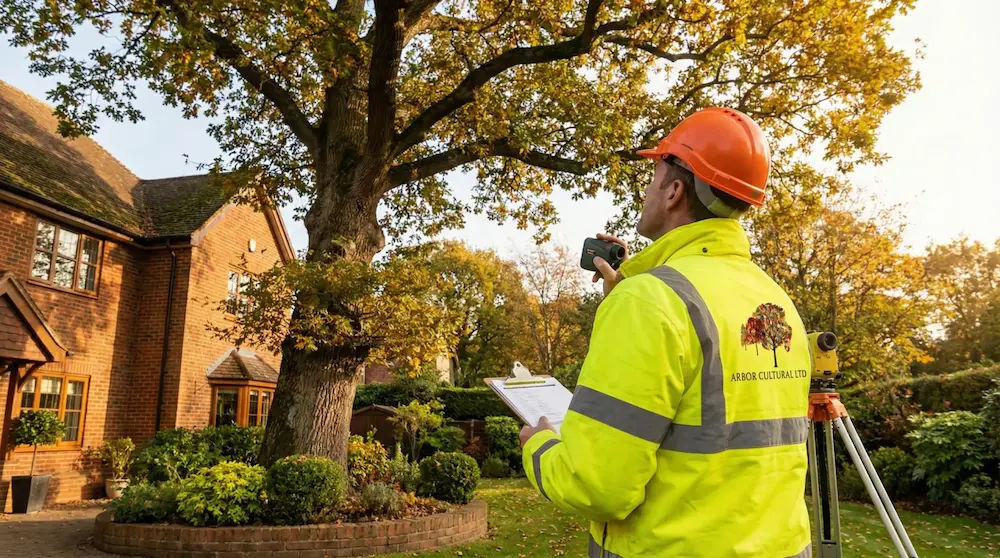
Arboricultural Consultants South East · Woking
Tree report Woking — independent written arboricultural evidence for planning, property, mortgage, insurance, tree condition and specialist decisions across the local authority area.
Not sure which tree report has been requested? Send us the wording, plans or concern and we will help define the report scope before you instruct.
FREE · NO OBLIGATION
Add your details below. If you are not sure which tree survey or arboricultural service you need, leave the service as “Not sure — help me choose”.
Our team will review your project and reply to . If we need more information to prepare your quote, we’ll get in touch.
This is an enquiry, not a booking. We’ll agree the scope and fee before you instruct us.
Prefer to talk? 0204 531 6444 · Email us
Please enable JavaScript to send this form, or use the phone/email links above.
Professional written evidence
A tree report should be written for the decision it needs to support. Planning authorities, lenders, insurers, property buyers and tree owners can all need different evidence even when the same tree is involved.
Written arboricultural information for development, including impact assessment, tree protection and method-statement stages where appropriate.
Independent reporting where a lender, insurer, building surveyor or buyer has raised a tree-related concern.
Clear findings and proportionate recommendations where tree condition, duty of care or management decisions need to be documented.
Evidence-led reporting where decay testing, root investigation or another specialist arboricultural technique is required.
See Tree Survey Woking for the local survey page covering the site visit, evidence gathering and survey process.
Woking local context
Tree surveys in Woking can serve very different purposes. A BS5837 planning survey, a tree-condition inspection and a property-related tree survey are not interchangeable, so the first task is to identify the decision the client needs to make.
Across Woking, Knaphill and Horsell, relevant trees can sit within the site, on boundaries or on neighbouring land. Survey scope should follow the physical relationship with the project rather than ownership alone.
Arbor Cultural provides independent arboricultural survey work so clients can move from an unclear tree question to measured site evidence, professional interpretation and a proportionate next step.
Woking’s planning validation checklist says a tree survey / arboricultural implications assessment / method statement can be required where a proposal is likely to affect trees within the application site or on adjacent land, including street trees.
The council’s protected-tree guidance also explains that planning conditions can require existing trees to be kept even where they are not protected by a TPO or conservation-area status.
That means the development assessment should distinguish between legal protection, planning conditions and the wider BS5837 relationship between trees and the proposed works.
What a good report should do
The exact format depends on the instruction, but useful professional reports share the same fundamentals: a defined purpose, relevant evidence, clear reasoning, appropriate limitations and recommendations that the intended reader can act on.
Who requested the report, what question is being answered and what decision the report is intended to support.
Relevant observations, measurements, photographs, schedules, plans or test results gathered for the agreed scope.
An explanation of why the evidence matters rather than a list of observations without context.
Clear conclusions, limitations and proportionate recommendations, including whether further specialist evidence is required.
A report for planning should not be recycled as a mortgage report, and a mortgage report should not be treated as a tree-safety risk-management document. The value comes from matching the report to the decision-maker and the actual question.
If the instruction changes after the site visit, or new drawings, monitoring information or structural evidence become available, tell the consultant. A professional conclusion is only as reliable as the scope and evidence on which it is based.
Planning reports
Where development interacts with trees, a BS5837 survey can provide the baseline tree information. Once a proposal exists, the planning submission may also need an Arboricultural Impact Assessment explaining the effect of the design, a Tree Protection Plan showing retained-tree protection, and an Arboricultural Method Statement describing how sensitive operations will be carried out.
Those documents answer different questions. A strong planning package therefore follows the site and proposal rather than using the same generic report for every application.
The most efficient time to resolve tree constraints is usually while design decisions can still change. Early arboricultural input can help architects and clients avoid preventable conflicts involving footprints, access, levels, drainage, services and temporary construction activity.
If Woking planning officers, a lender, insurer, building surveyor or another professional has asked for a “tree report”, send that wording with the site details. Small wording differences can materially change the correct scope.
You do not need to choose the report name yourself. Arbor Cultural can review the request and identify the appropriate written output before you instruct.
Property and tree-management reports
Property transactions, insurance matters and tree-management decisions require different evidence from planning applications.
A buyer, lender or surveyor may need an independent arboricultural opinion about trees close to a building, future management or a specific concern raised during the transaction.
Where movement or root influence is alleged, tree information should be considered alongside the wider structural, soil and monitoring evidence rather than treated as proof on its own.
Owners and managers may need documented findings and recommendations to support proportionate management and duty-of-care decisions.
TPO, conservation-area, neighbour or legal matters may need clearly reasoned arboricultural evidence written for the specific issue.
Where visual inspection leaves material uncertainty, tools such as decay detection or root investigation can provide additional evidence before conclusions are finalised.
Planning conditions can require supervision, monitoring or confirmation that tree-protection measures and sensitive works have been implemented as approved.
Arbor Cultural knowledge
These Arbor Cultural guides explain common planning documents, tree-protection requirements and technical questions that can sit behind a report request.
How BS5837 survey information feeds design and planning decisions.
What an AIA adds once a specific design can be assessed against the surveyed trees.
How construction methods near retained trees are described and controlled.
What a practical Tree Protection Plan should communicate to the site team.
Why Arbor Cultural
Arbor Cultural is a consultancy rather than a tree-work contractor. The aim is to define the question, inspect what is relevant and provide clear professional evidence without needing to sell follow-on pruning or felling work.
Woking questions answered
Clear answers to common questions before you instruct.
Yes. Its validation checklist refers to trees within the application site or on adjacent land, including street trees, where the proposal is likely to affect them.
Yes. Woking explains that planning permission can require existing trees to be kept as a condition of development even when they are not otherwise protected.
Depending on the proposal, the validation checklist can point toward tree survey, arboricultural implications assessment and method-statement information.
Yes. TPO/conservation-area status is a legal control; BS5837 planning assessment considers how trees and development interact. Both may matter.
It depends on the decision the report must support. Planning, mortgage, insurance, tree condition, protected-tree and specialist technical reports have different purposes. Send the request wording and Arbor Cultural can help define the scope.
Yes, where the report has been scoped for planning. BS5837-related submissions may involve a tree survey, Arboricultural Impact Assessment, Tree Protection Plan and Arboricultural Method Statement depending on the proposal and current requirements of Woking Borough Council.
It should identify the instruction, relevant evidence, methodology, professional interpretation, conclusions, limitations and proportionate recommendations appropriate to the intended reader.
Yes. The report should respond to the wording supplied by the lender, insurer, building surveyor or buyer rather than assuming a planning-style report is appropriate.
Yes. A condition-focused report can document visible defects, site context and proportionate management recommendations. Some cases may require specialist testing before firm conclusions are possible.
They can. Ownership alone does not determine relevance. A neighbouring or street tree may matter where its crown, rooting area or relationship with the site affects the question being considered.
Yes. The quote form accepts optional files, and documents can also be emailed to admin@arbor-cultural.co.uk.
Send the site postcode or town, your email and the reason the report is needed. Include the exact wording from the council, lender, insurer or surveyor if you have it.
No. It starts an enquiry. Arbor Cultural reviews the information and agrees the proposed scope and fee before professional work is instructed.
Yes. TPO or conservation-area controls can add a legal or planning layer to the technical arboricultural question, so protection status should be checked where relevant.
Tree report · Woking
Use the quote form at the top, or email plans, photographs and council or lender wording to admin@arbor-cultural.co.uk.