Planning and development
Where trees on or near a proposed development may influence the design, planning authority requirements or construction methodology.
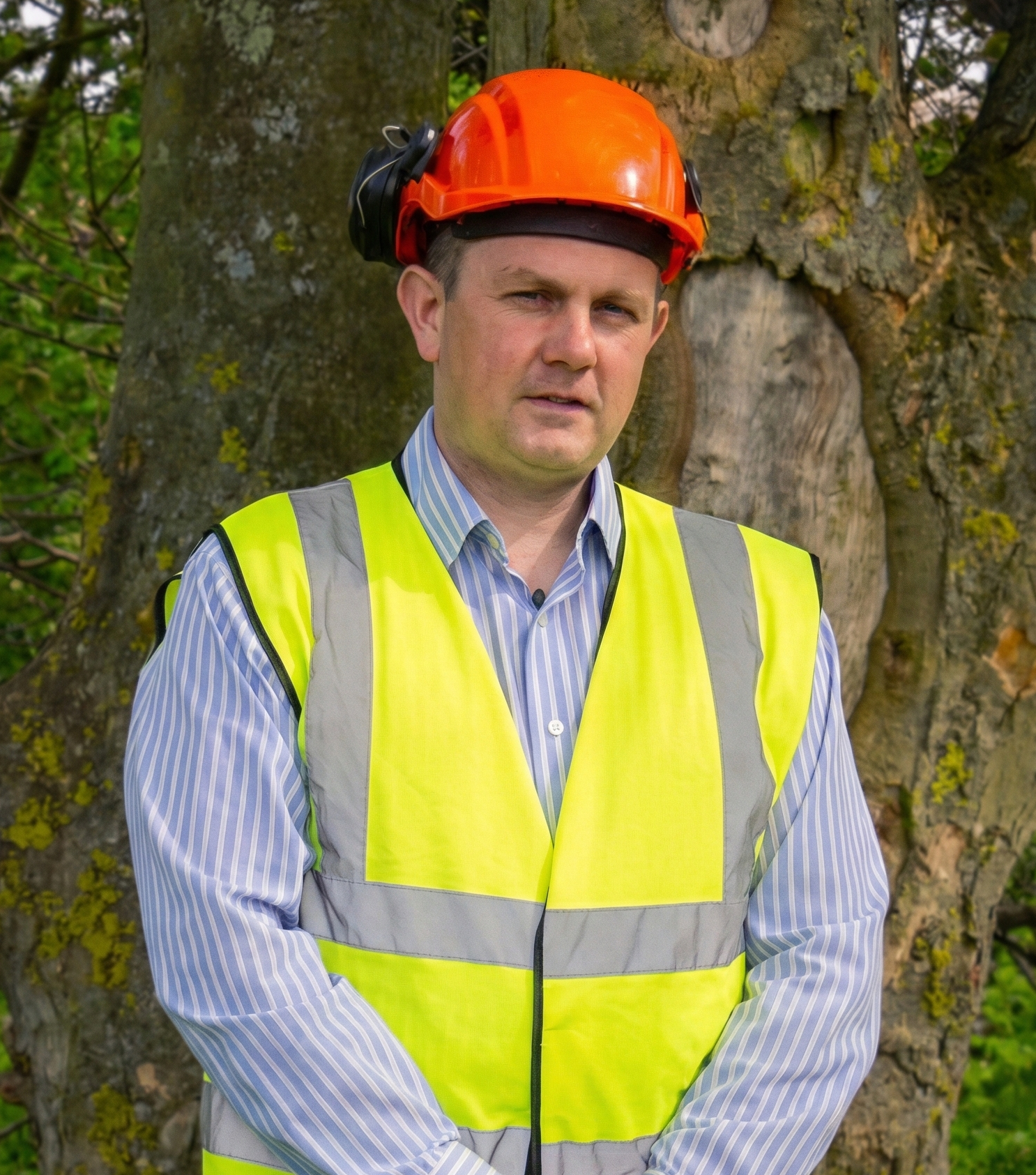
What a professional tree consultant does, when you need one, which tree survey or report may be required, and how independent arboricultural advice helps with planning, property, safety and legal decisions.
A tree consultant, also called an arboricultural consultant, assesses trees and provides independent technical advice. Rather than carrying out tree surgery, the consultant investigates the issue, records relevant evidence, interprets what it means and provides recommendations or a professional report for the person, lender, insurer, solicitor, architect or local authority making the decision.
A competent consultant connects what is happening on site with the decision that needs to be made.
The Arboricultural Association describes a tree or arboricultural consultant as someone with recognised qualifications and expertise in the care and management of trees, particularly trees in populated landscapes such as gardens, parks and other amenity settings.
In practice, the job is broader than simply identifying a species or deciding whether a tree looks healthy. The consultant has to understand why the assessment is being commissioned, what evidence is required, who will rely on the finished advice and what level of certainty can reasonably be reached from the available information.
That distinction matters because a planning officer, mortgage lender, insurer, architect, solicitor and private tree owner may all ask questions about the same tree but require very different outputs. A BS5837 survey for a development site is not interchangeable with a mortgage tree report. A visual condition assessment is not automatically a decay investigation. A protected-tree application needs a different evidence trail from an expert-witness instruction.
“The survey is the evidence-gathering stage. The real value of consultancy is turning that evidence into a proportionate, defensible next step.”
The Arbor Cultural approachA good tree consultant therefore does four things well: defines the question, collects the right evidence, interprets it professionally and communicates the answer clearly. The outcome may be a formal report, a plan, a schedule of trees, planning support, risk-management recommendations, a request for further testing or simply reassurance that no disproportionate intervention is justified.
The consultant is there to understand the condition, constraint or dispute objectively rather than to create tree-work instructions for their own contracting team.
The report should be written for its intended reader, whether that is a homeowner, lender, planning officer, architect, insurer or legal team.
The titles can overlap in everyday use, so it is more useful to look at the function being performed. If you need a professional opinion, survey, technical report or planning evidence, you are usually looking for consultancy rather than contracting.
| Role | Main purpose | Typical work | When you would use them |
|---|---|---|---|
| Tree / arboricultural consultant | Independent professional advice | Tree surveys, technical assessment, planning reports, risk advice, diagnostics, expert evidence | When a decision needs defensible arboricultural evidence or a written professional opinion |
| Tree surgeon / arboricultural contractor | Physical tree work | Pruning, dismantling, felling, planting, stump work and other practical operations | When approved or recommended tree work needs to be carried out safely and competently |
| Arborist | Broad professional term | Can describe people working in practical arboriculture, consultancy or both depending on context | Check the person's actual role, qualifications and service rather than relying on the title alone |
| Local authority tree officer | Public-sector tree and planning functions | Protected-tree matters, planning consultation, council tree management and policy input | They may assess your application or advise within the local authority; they are not your privately instructed consultant |
Arbor Cultural is a consultancy rather than a tree-surgery contractor. That separation removes a direct commercial incentive to recommend pruning or removal simply because the same business could then sell the work.
You normally need professional arboricultural consultancy when a tree-related issue affects a planning decision, property transaction, safety duty, legal process, building project or protected-tree application.
Where trees on or near a proposed development may influence the design, planning authority requirements or construction methodology.
Where a lender, building surveyor or insurer has requested a specialist tree report before a purchase, loan, policy decision or renewal can proceed.
Where a tree owner, site manager or organisation needs a professional assessment of condition, defects, foreseeable hazards and proportionate management.
Where trees are protected and proposed work needs arboricultural justification, evidence and the correct local-authority process.
Where trees, roots, soil and building movement need to be considered together using evidence rather than assumption.
Where tree influence, soil conditions or foundation design need coordinated arboricultural input alongside the building-control process.
Where planning conditions, tree protection measures or sensitive operations require method statements, monitoring or site supervision.
Where litigation, enforcement, damage, negligence, valuation or another contested issue requires independent specialist opinion.
Usually start with a BS5837 tree survey and Tree Constraints Plan. Depending on the proposal and planning stage, an Arboricultural Impact Assessment, Tree Protection Plan or Arboricultural Method Statement may also be needed.
Planning survey serviceYou normally need a mortgage or insurance tree report scoped to the written request. Send the exact wording so the report answers the questions the lender or surveyor actually raised.
Mortgage & insurance reportsA tree condition and safety assessment can record visible condition, defects, occupancy or targets, risk context and proportionate management recommendations. Further testing should be recommended only when it is justified.
Tree safety reportsThis needs a subsidence-focused arboricultural investigation, often considered alongside building, soil, monitoring and root evidence supplied by other professionals. Proximity alone is not proof of causation.
Subsidence investigationsFirst confirm the tree's legal status. If a Tree Preservation Order or conservation-area controls apply, the work may need an application or notification supported by appropriate arboricultural reasoning.
TPO adviceYou may need an Arboricultural Method Statement, Tree Protection Plan, supervision or site monitoring that translates the approved arboricultural strategy into practical site controls.
Construction-stage supportDo not guess. Send the email, planning condition, lender note, survey extract or insurer request with the site address. A consultant should be able to define the likely scope before quoting.
Upload the requirementEvery instruction is different, but a robust commission normally follows the same six principles: understand the question, define the scope, review the context, inspect the site, analyse the evidence and communicate the conclusion.
You explain what has prompted the request, the site location, your timescale and who needs to use the finished advice. Relevant emails, plans, photos and previous reports are useful at this stage.
The consultant identifies the appropriate service, exclusions, expected deliverables and access requirements. A good quote should make clear what you are buying rather than hiding behind a vague “tree survey” description.
Before the visit, the consultant may review supplied plans, planning correspondence, previous surveys, lender wording, ownership information or other relevant documents so the inspection is focused on the actual question.
The required tree, site and contextual evidence is recorded. The methodology changes with the commission: a BS5837 survey gathers different data from a mortgage report or a tree-risk assessment.
Field observations are interpreted in context. This is where professional judgement matters: an observation may be important, irrelevant, inconclusive or a reason to recommend further investigation.
The findings are converted into a clear output for the intended reader, with conclusions, limitations and prioritised recommendations. The goal is to make the next decision easier, not to create more uncertainty.
Useful principle: the more clearly the purpose is defined before the site visit, the less likely you are to pay for the wrong survey or end up with a report that does not answer the question your council, lender or project team asked.
Scope my enquiryThere is no single universal checklist. The inspection should be proportionate to the agreed purpose, but the following categories illustrate the evidence that may be relevant.
Identification provides context for likely mature size, growth characteristics, site suitability and known structural or physiological tendencies.
Depending on the survey, measurements can include stem diameter, height, canopy spread, clearance, spatial relationship to structures and mapped location.
Growth, crown density, shoot extension, foliage and general physiological condition can help describe current vitality and future management context.
Visible defects, unions, cavities, deadwood, damage, form, root-zone observations and other features may be recorded where relevant to the instruction.
Symptoms or fruiting bodies may change the assessment, but diagnosis and significance need care; not every fungus means a tree is unsafe.
For safety-related work, the occupancy and consequences around a tree matter. The same defect can have very different significance in different locations.
For BS5837 work, tree quality, crown position, root protection, shade, future pressure and the relationship between trees and the proposed design are central.
Tree Preservation Orders, conservation-area status, planning conditions and other constraints may affect what can be recommended or implemented.
Topography, surfacing, level changes, visible roots, rooting environment and the relationship with structures can be important depending on the commission.
If visual evidence cannot answer the question reliably, proportionate diagnostic investigation may be recommended rather than pretending the uncertainty does not exist.
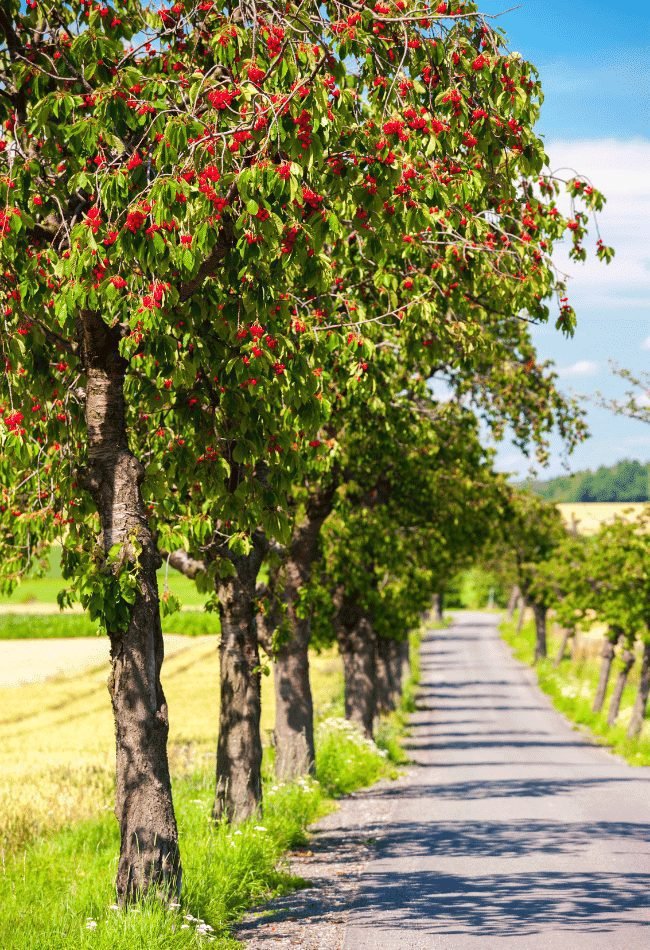
BS 5837:2012 is the current British Standard containing recommendations for trees in relation to design, demolition and construction. It is especially relevant where a development could affect trees, or trees could influence the design and use of the development.
A BS5837 tree survey is therefore not simply a “health check” and it is not a guarantee of planning permission. It provides structured tree information so designers and decision-makers can understand which trees are important, where constraints exist and how the layout may need to respond.
The best time to involve an arboricultural consultant is usually before the design is fixed. Early tree information can influence building position, access, levels, services, drainage, hard surfacing and construction methodology before redesign becomes expensive.
BSI notes that BS5837 recommendations can apply whether or not planning permission is required. In planning work, however, the local authority may request different documents at different stages, and the exact package should follow the site and proposal rather than a generic template.
Records the relevant trees and groups, their key dimensions, condition and quality information. Trees are commonly categorised A, B, C or U within the BS5837 framework.
Maps constraints such as crown spread and root protection information so the design team can see the spatial relationship between trees and the site.
Assesses how the proposed development affects trees and how tree-related constraints affect the proposal, including retention, removal and potential conflicts.
Shows the practical protection arrangement for retained trees during demolition and construction, such as protective fencing or other specified measures.
Explains how sensitive operations around retained trees are to be carried out where simple exclusion is not enough to manage the risk of damage.
Where required by the planning condition or method statement, a consultant may inspect key stages, brief contractors, record compliance or advise on unexpected site issues.
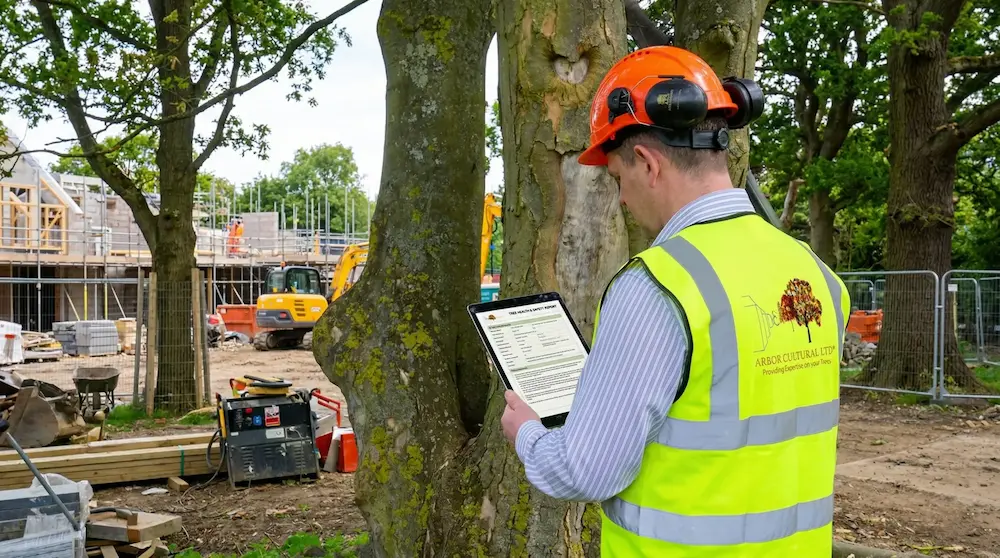
The exact contents depend on the instruction. A strong report is not judged by page count; it is judged by whether the evidence, reasoning and recommendations are clear enough for the intended decision.
What was the consultant asked to assess, for whom, and for what decision?
What was inspected, how the assessment was carried out and what was outside scope?
Relevant observations, measurements, schedules, photographs, plans or test results.
Why the evidence matters and how it affects the question being answered.
What can reasonably be concluded, what remains uncertain and whether further evidence is needed.
Actions should be proportionate, understandable and linked to the evidence rather than presented as unexplained instructions.
The best consultant for a BS5837 planning project may not be the best person for an expert-witness dispute or specialist decay investigation. Look for competence that matches the actual instruction.
Ask what arboricultural education, technical training or professional certifications are relevant to the work you are commissioning.
Someone who frequently handles the same type of planning, mortgage, safety or legal problem is more likely to scope it correctly from the start.
Memberships can support professional standing, but check the grade, relevance and what it actually signifies rather than treating every logo as equivalent.
For technical consultancy, appropriate insurance is an important part of a professional appointment and should be proportionate to the nature of the instruction.
The proposal should explain what will be inspected, what will be delivered, the fee basis, likely timescale and any information you need to provide.
You should understand whether the consultant also sells the remedial work they may recommend and whether that creates a commercial conflict.
Technical competence matters, but so does the ability to explain findings to planners, clients, lenders, insurers, architects, contractors or lawyers.
Be cautious of absolute conclusions unsupported by site evidence, or drastic recommendations where proportionate alternatives and uncertainty have not been considered.
Published reviews, repeat work, third-party listings, industry relationships and demonstrable project experience can help you assess reliability.
Arbor Cultural's principal consultant Tom Thompson is publicly presented across the site with arboricultural degree and postgraduate forestry credentials, professional Arboricultural Association standing, Consulting Arborist Society qualifications, LANTRA professional tree-inspection training and specialist expert-witness training. The company provides independent consultancy rather than tree surgery.
About Arbor CulturalThere is no single sensible price for “a tree survey” because the scope can range from one tree at a residential property to a complex planning site with mapping, impact assessment and construction-stage documentation.
Arbor Cultural uses a defined scope and fixed-fee quotation where appropriate. The most useful way to get an accurate price is to send the site address, the purpose of the report, available plans and the exact wording of any request you have received.
Get my quoteArbor Cultural provides independent tree consultancy across Greater London and a wide South East service area. Open a region below to see the full list of locations currently included in our coverage.
You do not need to know the technical name of the report. Give the consultant the evidence that explains the problem and let them define the correct scope.
The full location and, for larger sites, the relevant parcel or boundary.
Planning, purchase, insurance, safety, protected tree, damage, dispute or another reason.
Forward the council, lender, surveyor, insurer or solicitor wording where available.
Existing/proposed plans, topographical survey or layout information if the project has them.
Images can help identify scale, access, obvious context and the trees being discussed.
Planning deadline, exchange date, insurance requirement or other date that affects delivery.
Gates, tenants, neighbours, dogs, locked areas or anything that could affect a site visit.
Earlier arboricultural, structural, soil, monitoring or planning documents may be directly relevant.
If someone has told you to “get a tree report” but has not explained what that means, send the wording as it was given to you. Arbor Cultural can identify the likely scope and quote for the right service.
Start my quote →Short answers to the questions clients most often ask before booking a survey or report.
No. A tree consultant's main role is professional assessment and advice; a tree surgeon or arboricultural contractor carries out practical tree work such as pruning or felling. Some organisations offer both services, so ask whether the advice is commercially independent.
In most client-facing contexts, yes. “Arboricultural consultant” is the more technical term, while “tree consultant” is the plainer description. You may also see “arboricultural surveyor” or “tree surveyor” used for people carrying out particular types of assessment.
No. BS5837 is highly relevant where development and trees interact, but not every planning application needs the same arboricultural information. If your council has requested a survey or significant trees are on or near the site, get the requirement scoped early. See our BS5837 survey service.
The survey is the inspection and evidence-gathering process. The report is the written or mapped output that interprets that evidence for a particular purpose. In normal conversation the terms are often used interchangeably, but the distinction helps when defining scope.
A consultant can assess tree condition, visible defects, site use and other relevant factors and provide proportionate recommendations. No visual inspection can promise zero risk, and some cases need further investigation before a reliable conclusion can be reached.
Not necessarily. Many inspections are ground-based because that is appropriate to the agreed scope. If the question cannot be answered from ground level, further investigation may be recommended, which could involve specialist access or diagnostic techniques.
Not always. What matters is safe, lawful access to the relevant trees and enough information to identify the site, boundaries and instruction. If access is through a building, locked area or third-party land, arrangements should be made in advance.
It depends on the number of trees, size and complexity of the site, access, survey type and whether plans or specialist testing are involved. Ask for both the likely site-visit window and report turnaround when you receive the quotation.
Yes. Planning conditions may require a method statement, Tree Protection Plan, arboricultural supervision, monitoring or confirmation at key construction stages. The approved documents should be reviewed before work starts.
The significance depends on the type, location and extent of the decay, the tree's remaining structure and the site context. A responsible consultant should not jump automatically from “decay exists” to “fell the tree”; further testing or management may be more proportionate.
Yes, where the report is specifically scoped to the lender or insurer's request. Send the exact written requirement before instruction so the consultant can confirm that the proposed report will address it. See our mortgage and insurance tree reports.
Protected status does not automatically mean that no work can ever be carried out, but the correct local-authority process and arboricultural justification may be required. Do not begin work until the status and permission requirements are clear. See our TPO guidance and consultancy.
Subsidence causation can be complex. A tree's proximity to a building is not enough by itself. A proper investigation may need to consider tree data alongside soil, root, crack, level or monitoring evidence produced by other professionals. See our subsidence assessment service.
Arbor Cultural does not sell tree surgery. If physical work is justified, the report can define what is recommended and why, and you can then appoint an appropriate contractor separately.
Send the full site address, the reason for the enquiry, the required timescale and any plans, photographs, council comments, planning conditions, lender wording or survey extracts you already have. Start the quote here.
For technical decisions, use current standards and authoritative industry guidance rather than relying on simplified web summaries alone.
The current BSI standard for trees in relation to design, demolition and construction.
View BSI referenceIndustry guidance on the professional role of arboricultural consultants and the Association's consultant framework.
View AA guidanceA deeper Arbor Cultural guide to the planning survey, tree constraints and documents that can follow.
Read the BS5837 guideTell Arbor Cultural what has prompted the enquiry and send any wording, plans or documents you already have. We will identify the likely survey or report, define the scope and provide a clear quotation before you commit.