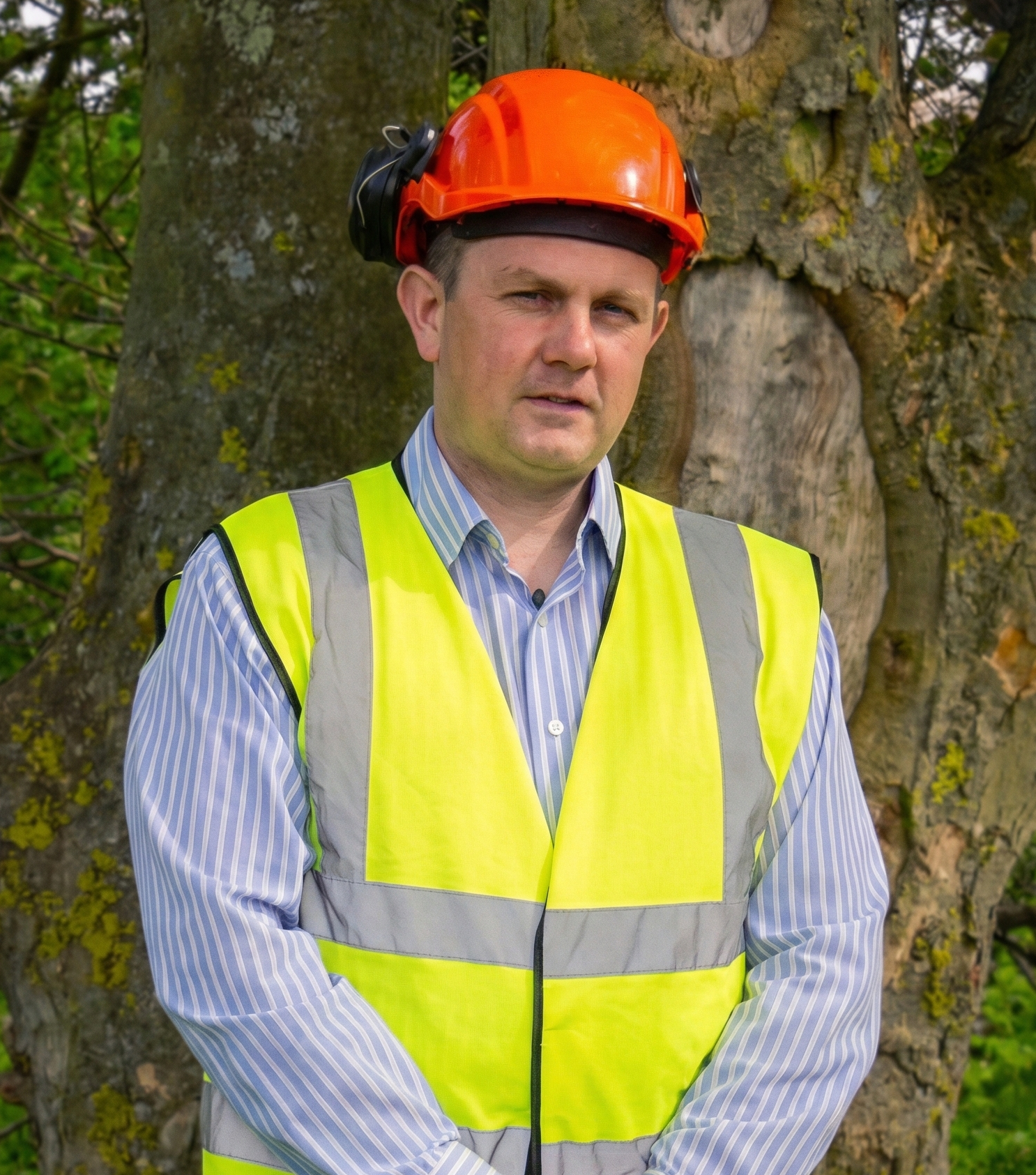
Tom Thompson
PLANNING & DEVELOPMENT 2026
When planning a new development in the Southeast—from the urban constraints of London to the leafy heritage of Surrey and Sussex—one aspect is frequently underestimated: the legal and biological complexity of the site's trees.
An Arboricultural Impact Assessment (AIA) is not merely a formality; it is an essential forensic document required to balance design ambitions with the preservation of natural assets. This guide provides a complete technical deep-dive into why the AIA is the most critical document in your planning application.
An AIA is a forensic evaluation of the trees on or near a proposed development site. While a standard BS5837 Tree Survey provides the initial inventory, the AIA assesses the potential impact of your specific design on those trees and suggests forensic measures to mitigate adverse effects.
By evaluating root protection zones and crown spreads against your architectural drawings, our consultants ensure that your project complies with British Standard BS 5837:2012, the mandatory framework for development near trees.
A data-heavy inventory of species, stem diameters, and physiological health. This determines the "Retention Category" of each tree on site.
A Technical Drawing mapping Root Protection Areas (RPAs) and shadow patterns to inform architectural layouts.
The definitive blueprint showing the exact location of barrier fencing and ground protection to keep trees "sterile" during construction.
The manual for contractors, detailing how to build without damaging roots. Essential for Planning Condition Discharge.
Across Surrey, Sussex, and Kent, Local Planning Authorities are becoming increasingly forensic in their review of arboricultural data. At Arbor Cultural, our process is designed to preempt council objections:
Our experts visit your site—whether in West Molesey, Crawley, or Winchester—to perform a preliminary BS5837 audit and identify high-value trees that could dictate your design.
We overlay your architectural plans with our TCP Data to calculate exact RPA incursions and suggest mitigation strategies like "No-Dig" construction.
If tree removal is essential, we provide professional replanting schemes and mitigation strategies to satisfy the biodiversity requirements of the planning application.
Once planning is secured, we provide the mandatory Site Supervision required to ensure all TPP measures are legally adhered to during the build phase.
While preservation is the primary objective of any Arboricultural Impact Assessment (AIA), development occasionally necessitates tree removal. Our role is to provide the forensic justification and technical solutions that allow your project to proceed without council friction.
Where high-value trees must be retained, we implement advanced design solutions to allow building works within sensitive zones.
If removal is unavoidable, we coordinate the necessary mitigation to ensure the site's natural capital is maintained or improved.
Securing planning consent often hinges on your ability to prove the protection measures will be legally followed during the build.
The Arboricultural Impact Assessment (AIA) is a living document. Its primary purpose is to satisfy the Local Planning Authority (LPA) during the application phase, but its secondary role is to govern the site during the build phase.
We handle the technical liaison with council tree officers across the Southeast to ensure your reports are accepted without revision.
Securing the legal start date for your project by converting AIA findings into an approved Method Statement.
Ensuring trees remain healthy post-build, adding long-term aesthetic and commercial value to the development.
An Arboricultural Impact Assessment is an indispensable part of any development project near trees. It ensures that trees are preserved and protected, complying with local planning authority requirements and British standards. At Arbor Cultural, we specialise in conducting thorough and reliable assessments that value the wealth, health, and wellbeing of your trees.
Our team is dedicated to providing sustainable tree management services that bridge the gap between complex engineering needs and environmental conservation. If you are planning a development and need a comprehensive arboricultural impact assessment, our specialists are ready to provide the professional authority your project requires.
Call 020 4531 6444 or email admin@arbor-cultural.co.uk
Request Technical Quotation
Tom Thompson
Hi, I'm Tom. I can help you with all your tree related queries in 60 seconds!